

SIGNAL TO NOISE COMMUNICATION
One of the main reasons I embarked on a career in NOT, and why I have enjoyed many years in the profession, is the variety of technical disciplines that need to be addressed and the variety of applications encountered. However, the range of non-technical aspects pales into insignificance when compared to the variety that human factors introduce into NOT. Within a nominally homogeneous group of operators, similarly trained and qualified and working with the same technique in the same profession, each individual applies a different set of skills, experience and thought processes.
I am reminded of this variability on a daily basis with respect to memory. My memory works in such a way that I am good at remembering faces, but I am not so good at remembering names. Both of these traits can lead to embarrassing situations: the former when I went to say hello to someone I thought I knew but remembered, just in time, that I only saw him on a regular basis working in the office behind the bank counter and had not actually had any contact with him; the latter, well you can imagine the embarrassment that can cause! In a similar vein, there are events in the past of which I have no recollection, whilst I have clear, distinct and persistent memories of certain moments of no particular importance.
One such moment happened many years ago as I was travelling south on the M6. The motorway was as clear as the M6 can be and I was able to glance at the undulating countryside next to the motorway. I looked at the trees and could clearly see the individual leaves with their crenated edges. My recollection of my thoughts at the time is as clear as my memory of the place and situation. “Human eyes are amazing. I can see detail on a leaf. I can see the multitude of leaves on the tree. That alone is a lot of information to be able to receive and process. However, I am travelling at 70 mph with an angular field of view and the scene I am looking at is changing rapidly. I am taking in and processing an incredible amount of information:’ it was a moment of wonder that has stayed with me.
Last week, whilst browsing in the airport bookshop, I glanced through a book I had referenced in this column in April 2015. Back then, I was championing the proof that humans cannot multitask. The title of the book is: The Organised Mind: Thinking Straight in the Age of Information Overload, by author and neuroscientist Daniel J Levitin. The moment I described in the previous paragraph took place after the black and white period, but pre-internet and wireless connectivity. These days, in addition to the information from the natural world, we have a lot more material goods and are bombarded with information from the virtual world. As the title suggests, the book describes how we can now be easily overloaded with information. We only have a limited amount of energy for processing information and it is important that we conserve it for the more important tasks. All the decisions we make use up neural resources and small decisions appear to use up as much energy as larger, significant ones.
When I go out running early on a Sunday morning, the bird song in the woods, though produced by many different birds, is clear, harmonious and enjoyable. Recently, whilst I was in the garden, a flock of birds in the trees squawked loudly and chaotically, which overloaded my aural system and was particularly annoying. I realised then that Twitter is well named. Occasionally, a series of tweets exhibits a certain quality of communication, but the vast majority just create a background noise that makes it hard to identify the tweets that are of interest.
As NDT professionals, we know all about signal-to-noise and the problems that poor signal-to-noise can cause when it comes to interpreting the data and extracting the key information. When trying to communicate, the noise not only distorts or hides the message, but it also uses up our limited mental resources. This makes it incumbent on all of us to consider what and how we want to communicate, be that in an email, in a procedure or in a software interface.
These days, when driving on the motorway, in addition to the natural environment described above and the increased volumes of traffic, we now have the overhead gantries contributing to information overload. ‘Junction 21,2 miles, 2 minutes’. What use is that? In two minutes you would know you are at Junction 21. Two minutes is not enough time to allow you to do anything in response to the information given! We could all benefit from following Gandhi’s advice: ‘Speak only if it improves upon the silence’
Please note that the views expressed in this column are the author’s own personal ramblings for the purpose of encouraging discussion within the NOT Newspaper. They do not represent the views of Amec Foster Wheeler or the HSE who funded the PANI projects. Letters can be mailed to The Editor, NOT News, Newton Building, St George’s Avenue, Northampton NN2 6)B. Fax: 01604 89 3861; Email: ndtnewseoindt.orq or email Bernard McGrath direct at bernard.mcgrath@amecfw.com
Bernard McGrath

Q&A WITH JANNIE DE BEER
 CEO- Non-Destructive Academy of South Africa (NASA)

SAINT HONOURS WOMEN IN NDT
Until only a few decades ago, women were subject to the then society norm of being associated with jobs supposedly best suited to their gender, thus reserving most technical career paths in the working world to men. Fortunately, times have changed, allowing stereotypes that separate men from women to largely fall away. South Africa’s engineering industry was male dominated until the 1940s, and has since evolved to enable more women to develop and exercise their technical abilities and expertise.
The South African Institute for Non-Destructive Testing (SAINT) is proud to host its first ever ‘Women in NDT’ conference in South Africa, taking place on 14 October 2016 at the Council for Scientific and Industrial Research (CSIR) in Pretoria.
Acknowledging Expertise
“SAINT initiated this unique platform as a long awaited opportunity to acknowledge women NDT practitioners for their expertise and for the crucial role they play in the South African NDT industry,” says SAINT President Keith Cain. “The aim is to inspire, inform and recognise women in NDT – it certainly is a first in South Africa, and possibly in the world.”
Women Facing Challenges
“NDT has long been a predominantly male occupation, but this is changing rapidly; SAINT’s women members need to be recognised as worthy practitioners, hence this important day of inspiration and sharing of experiences by SAINT members,” says event Programme Director MC Elaine McDonald. “We want to encourage women to reach for higher goals in NDT. Many of them face unique challenges in the industry such as discrimination.”
A study carried out by University of Cape Town (UCT) student Kathryn Wooldridge shows that women in the South African engineering industry working at the same levels as men tend to receive lower salaries than their male counterparts. Another challenge faced by women in the engineering industry is finding a balance between the responsibilities of family and work. Kathryn Wooldridge is one of several exciting speakers who will address delegates at the conference.
The Exciting Speaker Line-up includes
-
- MC Welcome Address
Elaine McDonald – General Manager: School of Applied Non-Destructive Examination (SANDE)
- MC Welcome Address
-
- Keynote Address: Radiographic Testing and Pregnancy
Emma Snyman – Radiation Control: Department of Health
- Keynote Address: Radiographic Testing and Pregnancy
-
- New Generation Woman
Sunithi Barends – Level II Inspector: Murray and Roberts
- New Generation Woman
-
- Breaking Ground as a Woman in NDT
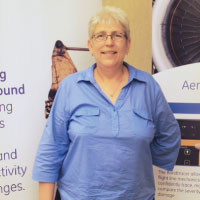
Amanda van der Westhuizen – Sales Leader, Sub-Saharan Africa: General Electric – Oil & Gas
- Breaking Ground as a Woman in NDT
-
- The way in which women in the NDT industry in South Africa experience gender roles, attitudes and discrimination

Kathryn Wooldridge – Student at UCT
- The way in which women in the NDT industry in South Africa experience gender roles, attitudes and discrimination
-
- The Feminine Contribution to NDT

Hannes Barnard – General Manager: African NDT Centre (ANDTC)
- The Feminine Contribution to NDT
-
- The Birth of this Event and the Importance of Mentorship
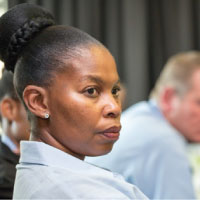
Zanele Mgiba – NDT Process Planner: Rotek Engineering Company Limited
- The Birth of this Event and the Importance of Mentorship
-
- Honouring Women in NDT

Thea Wagner – Senior Sales Representative: Gammatec
- Honouring Women in NDT
A Tribute to the women of SAINT
“I expect this day to motivate and inspire women in NDT, not only on an inspection level but also on an administration level,” says Thea Wagner, Senior Sales Representative at Gammatec, and a member of the Women in NDT Day Organising Committee. Wagner will provide more information on Ultrasonic and Radiographic Testing and the impact these testing methods could have on pregnancy. “Women – We know our limitations and then defy them!” quips Wagner.
“SAINT is extremely proud to be hosting not just a day of inspiration, but an opportunity to honour these women that work hard to make a difference,” concludes Cain.
For more information visit: www.saint.org.za,SAINT Facebook

TECHNOLOGY NEW AND OLD

BINDT’s very own author Bernard McGrath is “onthejob” in an exciting article about the development of technology in Non-Destructive Testing. Bernard McGrath is a writer for BINDT publications, will be providing articles to keep you on your toes with interesting and informative industry insights!
It was one of those moments when you instinctively respond and then, sometime afterwards, you realise the implications of what you have just agreed to. It is generally when you are distracted and not giving your full attention to the speaker. Kids are masters at deploying this technique to get their way and it is a device that is often used in comedy. Only this time I didn’t think it was funny. Well, OK, I did because you can’t take yourself too seriously, can you?
The interchange started with the other person making a disparaging comment about 50s/60s technology. I automatically agreed with the sentiment. It was only when I was on my own that I realised with a start – I am 50s/60s technology! I may be in a minority here but I do not believe that this 50s/60s technology is ready to be replaced. The rapid growth in certain areas of technology over recent years, coupled with some of the perceived personal benefits, means that we have been lulled into the automatic perception that new technology is particularly good. By default, this means that we perceive old technology as not so good and that it has been left far behind by modern innovations. Yet, if you consider the facts more carefully, this is not always the case.
A recent programme on CNN looked at the history of the first appearances of renewable technologies. It made for enlightening viewing: hydrogen fuel cell, 1838; principle of solar power, generating electricity with no moving parts, 1876; wind turbine generator, 1888; commercial hydropower plant, 1893; and application of geothermal power, 1922. In fact, the only technology from recent years was wave power in 2000 and these prototypes are no longer in operation.
In his column in the Sunday Times at the beginning of April, Luke Johnson refers to the opinions of two economists who believe that the’ 1970s were the turning point in technological development. Radical technical advances in the lead up to the 1970s, such as the internal combustion engine and refrigerators, are unlikely to be repeated and the change in social and economic factors, before and after, means that incomes and living standards have flattened out.
Anecdotally, it is easy to concur with these views. 50s/60s technology put a man on the moon and produced Concorde. The invention of the e-book was supposed to sound the death knell of the hardcopy book, but hardcopy books are just as popular today. Similarly, the MP3 player and online streaming are suddenly not sufficient to prevent a revival in the purchase of vinyl. When you examine some modern consumer technology, there haven’t been any major changes in products. It has tended to be incremental improvements on what has gone before, such as HO, brighter and larger TV screens, cars with satellite navigation and Bluetooth and smaller, portable devices.
The Sunday Times columnist went on to put forward his views on why we have not seen radical technological advances since the 70s, as were seen prior to this decade. Whilst his reasoning is logical, there are many factors at play and it is not easy to come up with a single explanation. One could suggest that technological advancement is analogous to exploration and that all the obvious expeditions into the unknown have been successfully completed. All that is left is to do something that has been done before, but with an added extra challenge.
One discipline area that I think runs contrary to the hypotheses promulgated by the two economists is medical diagnosis. It could also be argued that doesn’t fit the model. Whilst the Non-Destructive Testing (NDT) profession was developed prior to the 70s, some significant developments were made through the 70s and 80s. After a slight hiatus, further advances in equipment have been made in more recent years and are still being developed today, including ultrasonic phased arrays, digital detectors for radiography, advanced visible and infrared camera systems and robotic delivery technology. All these advances have the potential to deliver major benefits.
So, why should NDT be out of synchronisation on the technical development front? Could it be that we are still gripped by the search for the NDT Holy Grail, as we have been for the duration of my time in NDT? Is there that one development that would be applicable to any inspection situation and deliver reliable detection and sizing of any defects? However, if one new technology cannot deliver this goal, then maybe the answer lies in combining a number of technologies, controlled by the next big thing: Artificial Intelligence.
Watch this space! Please note that the views expressed in this column are the author’s own personal ramblings for the purpose of encouraging discussion. Feel free to email saint@saint.dev.co.za
Reproduced here with kind permission of the author
CUSTOMERS & CODES VS NEW NDT METHODS
 With the development of technology there is a fine line in the relationship between Manual Ultrasonic Testing, Time-of-flight diffraction (TOFD), Phased Array Ultrasonic Testing (PAUT) and other encoded methods in relation to Codes and the customers’ expectations of Ultrasonic Testing. Level III NDE Inspector Philly le Roux keeps us up to date on ‘Customers and codes versus New NDT methods…..
During the past decade Non-Destructive Testing (NDT) has evolved rapidly with new technology and/or methods being implemented in the NDT market. However certain questions still remain.
Do the International Codes relate to new NDE methods?
New technological developments made over the current decade are quite remarkable, particularly the American Society of Mechanical Engineers (ASME) Codes that have addressed much more techniques and produce progress on the various methods annually, while the Euro Norm and ISO codes have begun implementing these techniques, it still plays second fiddle to the advancement and progress of new technology in relation to ASME codes.
Do we comply with International Codes?
In most cases we currently comply with the relevant Codes. However in some instances it maybe an opinion or interpretation of the Code that varies from one individual to another. For example, ASME B31-1:2004 (Power Piping), already incorporated the recording of UT data during Ultrasonic Examination. According to ASME B31-1:2010/2012/2014 (Power Piping) section 136.4.6: The following criteria shall also be met when performing ultrasonic examinations:
The equipment used to perform the examination shall be capable of recording the UT data to facilitate the analysis by a third party and for the repeatability of subsequent examinations, should they be required. Where physical obstructions prevent the use of systems capable of recording the UT data, manual UT may be used with the approval of the owner.
Various customers and NDT personnel disregard or interpret the above statement differently. Some say Manual UT is permitted where others say TOFD, PAUT or other encoded methods must be applied to perform the encoding of data for review. Surely all parties need to agree that there can only be one conclusion to the above reference from ASME.
Do NDT customers have knowledge of new NDE methods?
Over the past few years it has become more and more evident that the South African market is not ready for change or possibly do not have the necessary know-how to implement these changes due to;
- People not being ready for change
- People being inadequately informed
- Internal processes blocking progress
- Outdated manufacturing Codes being used for new builds
- Cost factor, which should never out way quality or code compliance
The main concern from clients is that they believe new technology is more sensitive than basic NDT methods. Sensitivity is a questionable concept as Codes’ acceptance criteria guide compliance. Nonetheless one of the main advantages of new technology/methods is the probability of detecting discontinuities that is significant. The two main contributing factors are;
- Advance method capabilities
- Reducing the human factor that is considered experience in the NDE market.
There are additional factors that can influence the above statement and not only one NDE method can replace all other methods, as NDE methods supplement each other.

Phased Array Ultrasonic Encoded data scan of 1.6m on 40mm double bevel weld, Skew 90 and S270 at the same time, with sectorial setups to cover full range.

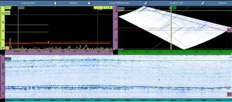
Phased Array Ultrasonic Encoded data scan of 1.6m, Skew 90 and S270 with A-Scan, S-Scan and B-Scan presentation

SAINT 2016/17 Yearbook
The 2016/2017 SAINT Yearbook Launch is is now just a fond memory, but the Handbook is a still a “must have”! If you missed out on your copy at the launch, you still have a chance to buy one! The 2016/2017 Yearbook is available, simply fill in the Order Form to get a copy.
Click below to download Brochure


SOUTH AFRICA STANDS STRONG AT THE WORLD CONFERENCE ON NON-DESTRUCTIVE TESTING
June 13 2016 marked the start of the 19th World Conference on Non-Destructive Testing (WCNDT) in Munich, Germany. Members of South African Institute for Non-Destructive Testing (SAINT) came together to represent the South African NDT industry at this global gathering.
According to SAINT President Keith Cain, the conference and exhibition, which ran from June 13 to 17, provided fascinating insights into using technologies such as robotics, real-time feedback and e-Learning. Cain adds that methods of training and technological advances are an important factor in bridging qualification and gathering experience in the workplace.
“The conference had a massive attendance from the world over; over 2500 participants registered for the conference including 275 exhibitors and 670 presenters. Our country was strongly represented with seven South Africans presenting papers and posters,” said Cain.
Keith concludes, “South Africa has adopted many of the international standards, as we did not want to reinvent the wheel. We have an addendum that pertains to local labour and other regulations, but because there is a lack of resources, we are not always able to establish our own standards.”
For more information Conference visit the World Conference on Non-Destructive Testing website www.wcndt2016.com
