

Hope Rains Eternal
Published with kind permission of BINT from the article OnTheJob
written by Bernard McGarth
“It’s a bit black over Bill’s mother’s” is a phrase from my childhood which I hadn’t heard in a long while. It came to mind a week ago and then, coincidentally, was mentioned on the radio a few days later. Only they gave a slightly different version, which wasn’t right: the one you remember is always the correct one. By all accounts the phrase was common in the North and Midlands and there are a number of variants: “It’s getting black over the back of bill’s mother’s”; “It looks pretty black over Will’s Mother’s”. On the radio, it was quoted as part of a conversation about weather phrases, instigated by “Ne’r cast a clout ’til May is out”. Even with this more common phrase there was discussion. Is it May the month? Or May as in the May Flower? The meteorologist supported the latter. All I know is that the weather is quite chilly, despite the sunshine, and being wrapped up is the rig of the day.
Before the radio programme, it had been bit black over Bill’s mother’s while I was out for my weekend constitutional. The clouds towards the horizon threatened rain. It is a skyscape familiar to those in North West England. It brought to mind a painting bought many years ago. The scene was of the Manchester ship canal and the motorway bridge which spans it. However, these were minor support acts at the bottom of the picture, underneath a large expanse of sky, showing a mixture of dark rain clouds, pierced and tinted with rays of sunlight. An image intrinsically linked to home. The dark clouds always give a sense of foreboding about a possible imminent downpour. This is counterbalanced by the bright portions of sky, and the light that pierces the gloom, giving hope of a good final outcome.
Back in 2014, I wrote in this column and subsequently gave a presentation at the BINDT annual conference, on the bright future that was facing NDT. The basis for this statement was the Knowledge Transfer Report entitled: “A landscape for the future of NDT in the UK economy” which gave a positive view for the future of NDT. In addition, there were a number of proposed infrastructure projects within the UK, technological developments in techniques reaching fruition and a growing interest in the challenges presented by structural health monitoring (SHM) and online monitoring. There was every basis for optimism. Since then, there have been a few instances of it looking a bit black over BINDT’s mother’s! Two nuclear new build projects have been cancelled and the squeeze on the oil and gas industry has had an impact.
But, as with the North West skyscape, there are bright rays and signs that hold out hope for a positive future for the NDT profession. Probably one of the brightest has been the development of the NDT Apprenticeship scheme, which encompasses different levels of qualification for entrants, so funelling appropriately trained and qualified personnel to the profession. On the technology axis, companies are continually updating and launching new models incorporating new developments, whilst universities, and UK Research Centre for Non-destructive Evaluation (RCNDE) in particular, continue with the basic research on new techniques and applications.
As in my article back in 2014, I have a “but” to add. Unlike in 2014, this does not sprout from disquiet and frustration but rather from lifelong learning to be prepared, just in case that bit of black over Bill’s mother’s develops into a lot of black immediately overhead and deposits its contents on top of you! While we can be confident that technology and qualifications are being addressed, we need to be predicting what other areas of the profession will need to be investigated to find out how to build resilience and achieve innovation.
We have two potential sources immediately to hand and I offer suggestions for consideration. The research by RCNDE is rightly focussed on science and engineering: how about some university research being conducted on the business side of NDT, to provide suggestions on future improvements to business models, technology uptake and personnel supply and retention? Second, what about the personnel engaged in NDT at all levels? At the annual conference there are technical papers and in the past there have been practitioner workshops. Maybe there could be a session where NDT personnel suggest initiatives that could aid future improvements to business models, technology uptake and personnel supply and retention?
My faith in the future of NDT is somewhat stronger than my expectation of responses to the content of this article. But I live in hope!
Bernard welcomes feedback you can write to him at bernard.mcgrath@woodplc.com

Explaining the NDT Profession – Poetry in Motion
Published with kind permission of BINT from the article OnTheJob
written by Bernard McGarth
I have previously written about the difficulty of explaining the NDT profession to those who have no knowledge of it. It is not so much the description, as the willingness of the target to maintain their attention. So I have been thinking of using an alternative tack.
What did you do at work today?
I Queued:
I queued on the motorway and A roads;
I queued to get in the car park;
I queued to get on to site, to get my pass.
What did you really do at work today?
I was Briefed:
I was briefed on Health & Safety;
I was briefed on the work scope;
I was briefed on the procedure.
I Checked:
I performed equipment checks;
I performed weekly checks on the flaw detector;
I performed weekly checks on the probes;
I performed daily checks on the probes.
I Assessed:
I assessed the component;
I assessed the access;
I assessed the numbering;
I assessed the surface finish;
I assessed the datums;
I assessed the attenuation.
What did you really do at work today?
My Craft, finally:
I scanned the weld;
I plotted indications;
I analysed the results;
I wrote the report;
I ensured the integrity of the weld.
Did you do anything else?
I protected the plant.
I protected the workforce.
I protected the community.
And?
I preserved the environment and I made the world a safer place.
I don’t claim to be a poet and I know there will be readers out there who could do a much better job. So if you have a poem or a limerick, short or long, rhyming or not, and are willing to share, then send them in to the editor.
Bernard welcomes feedback you can write to him at bernard.mcgrath@woodplc.com

Robust Debate
Published with kind permission of BINT from the article OnTheJob
written by Bernard McGarth
Back in July 2015, I wrote about patterns and how humans engage with them. Artificial intelligence (AI) is replacing humans in identifying patterns, making short and accurate work of sorting through large amounts of data without getting tired or needing tea breaks. This is particularly pertinent with the vast amounts of data that we like to collect – just in case! However, some patterns are barely patterns at all: more a thread or even just a series of disparate points, which suddenly coalesce to lead to a new insight. Such sparse patterns may be more suited to human identification than to AI analysis. Let me explain.
Some time ago, when talking to a colleague just before his retirement, I asked him what he had enjoyed about his work as a materials technical expert. His reply caught me by surprise. He said it was the opportunity to argue technically, logically or philosophically with peers and equals when both or all are trying to get to the same place, but have different views on how to get there. Not an emotional exchange and there is a challenge to articulate your case.
At the time, I immediately thought that this was good material for the basis of an article, but what else could I say alongside it without detracting from it? I am now thinking that maybe the paragraph above is sufficiently thought provoking, that I could have got away with just having that as the full article! I missed a trick there. Luckily, along came another point in the thread. This was a dispute between someone disparaging Winston Churchill and a well known TV personality who jumped to his defence. Just the opposite, in fact, to different views trying to get to the same place. In itself, this point didn’t add to my nascent hypothesis, but it did raise a flag so that my attention was caught by another reference to Churchill.
The Rt Rev Graham James, on Radio 4’s Thought for the Day, gave a balanced view of the wartime prime minister. He made reference to the journalist Daniel Finkelstein’s opinions, which included the belief that Churchill’s “crowning achievement was to preserve a culture in which robust discussion among free people about what matters most provides the best context for human civilisation to flourish”. So the pattern coalesces: a culture of robust discussion. Another point from history was highlighted in the book and film regarding Abraham Lincoln and his team of rivals. Following his election in 1860, Lincoln appointed to his cabinet three of the people who had run against him. He obviously wanted not just those who would agree with him, but competent people who would put forward different views and challenge.
Finally, talking to a family member, a contrast was made between organisational changes that left people working in isolation when they had previously had a team around them from different technical disciplines. This impacts on the individual as well as the organisation. The ability to vocalise concerns, issues and solutions to a colleague, even if that colleague may not be able to offer a detailed technical viewpoint in response, is of substantial benefit to the individual in successfully discharging their responsibilities. In addition, the opportunity to discuss technical issues with peers facilitates learning, aids succession and builds experience. And this is before we get into the mental health benefits, which accrue from being with colleagues and teams.
In our profession we are lucky to have many opportunities to engage in robust discussion. The British Institute of Non-Destructive Testing leads the way in this: the various committee meetings, the branch meetings and the annual conference all provide fora for having your voice heard and hearing alternative viewpoints and robust discussion. Then there are numerous other meetings and seminars, organised by various organisations, which give similar head room to think about things other than the minutiae of the day job. We mustn’t become complacent in these assemblies because there is a danger of group think. Do we consider alternative views?
However, the most important place for sharing robust discussion is in the workplace with our colleagues. Do we give sufficient priority to this? Then there is the potential isolation of the operator who is sent off on their own to do their particular inspections. Do we give enough time for feedback discussions after inspections? Experience is key to competence: do we ensure that practical experience regarding observed signals and defect responses is shared sufficiently?
Terminology – Document Definitions
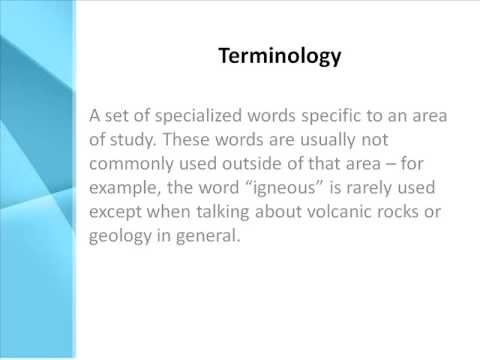
Terminology
The standard US terminology for Nondestructive testing is defined in standard ASTM E-1316.[36] Some definitions may be different in European standard EN 1330.
Indication
The response or evidence from an examination, such as a blip on the screen of an instrument. Indications are classified as true or false. False indications are those caused by factors not related to the principles of the testing method or by improper implementation of the method, like film damage in radiography, electrical interference in ultrasonic testing etc. True indications are further classified as relevant and non relevant. Relevant indications are those caused by flaws. Non relevant indications are those caused by known features of the tested object, like gaps, threads, case hardening etc.
Interpretation
Determining if an indication is of a type to be investigated. For example, in electromagnetic testing, indications from metal loss are considered flaws because they should usually be investigated, but indications due to variations in the material properties may be harmless and nonrelevant.
Flaw
A type of discontinuity that must be investigated to see if it is rejectable. For example, porosity in a weld or metal loss.
Evaluation
Determining if a flaw is rejectable. For example, is porosity in a weld larger than acceptable by code?
Defect
A flaw that is rejectable – i.e. does not meet acceptance criteria. Defects are generally removed or repaired
https://en.wikipedia.org/wiki/Nondestructive_testing#Terminology
Document Definitions
- Normative document: Document that provides rules, guidelines or characteristics for activities or their results.
The term normative document is a generic term that covers such documents as standards, technical specifications, codes of practice and regulations [ISO GUIDE 2].
- Standard: Document established by consensus and approved by a recognised body, that provides, for common and repeated use, rules, guidelines or characteristics for activities or their results, aimed at the achievement of the optimum degree of order in a given context [ISO GUIDE 2].
- Code of practice: Document that recommends practices or procedures for the design, manufacture, installation, maintenance or utilization of equipment, structures or products.
A code or practice may be a standard, a part of a standard or independent of a standard [ISO GUIDE 2].
- Specification: The document that prescribes the requirements with which the product or services has to conform.
A specification should refer to or include drawings, patterns or other relevant documents and should also indicate the means and the criteria whereby conformity can be checked [BS 4778: Part1].
- NDT Procedure: A written description of all essential parameters and precautions to be observed when applying an NDT technique to a specific test, following an established standard, code or specification [PCN/GEN].
- NDT Instruction: A written description of the precise steps to be followed in testing to an established standard, code, specification or NDT procedure [PCN/GEN].
Pigeon Hole or Self Help Tool Novmber 2018 from BINT’s OntheJob Magazine
Our thanks to Bernard McGrath for sharing his “Musings” with us.
Pigeon hole or self-help tool?
When did you last take a personality test? Not one of those magazine features which test if you have an anger problem or whether you are a gym obsessive, but one of those that highlight your personality traits. Are you an extrovert or an introvert? A completer/finisher or a plant? A dominating red or a sunny yellow? These tests can be a lot of fun, especially if done as a group. Yes, I knew he would be a red. What do you mean I’m not a completer/finisher? I intend to go back and finish that report! However, they can be quite stressful, particularly when undertaken as part of a job selection or assessment process.
I clearly remember doing such a test when being interviewed by a large company. Towards the end of the day I was given my results. As I listened to the report that was generated by the test, I felt quite pleased. I sounded quite a balanced personality, something I would aspire to be. Obviously, the company were looking for someone with a contorted character trait, which would drive them to generate more profit. Over a decade later, I undertook another personality test as part of a group. Having learnt from previous experiences, I answered the questions as I would respond in the work situation and not necessarily in line with what I considered to be my natural inclinations. In isolation, the result wasn’t bad, but I found it difficult to accept that my personality was the same as some of the other members of the group who obtained the same output.
One of the tests I have undertaken a couple of times during my career is the Myers-Briggs Type Indicator. This looks at four diametric pairings of personality: Extraversion – Introversion; Sensing – Intuition; Thinking – Feeling; Judging – Perceiving. A history of personality testing, reviewed in the Sunday Times in September, highlighted the fallacy of using this relatively simplistic approach to describe something as complex as an individual’s personality. This is shown by the development from empirical research of the Sixteen Personality Factor Questionnaire (16PF) by R. B. Cattell and co-workers. However, the demand of simplicity reigns and these 16 factors were found to be able to be condensed into five groups: The Big Five. In addition, from my own experience described above, it can be seen that we modify our personality to the circumstances that we are experiencing at the time. Guidance on the colour personality test states that the same result could be obtained from two or more colours, that no one person is just one colour, that all of us have some of each colour but some colours may predominate, that the colours may describe some people well whilst other people may not resemble their colour! So what is the point?
Personality, whether we like or not, does affect the way we perform at work and interact with people and our personality predisposes us to behave in a certain way. This is why, in the PANI 3 project, the performance on the ultrasonic task was compared to scores on a personality test known as the Gordon’s Personal Profile Inventory. The results showed a positive correlation between overall ultrasonic error performance and three of the eight personality factors that the test examined. As we have seen, personality is not fixed but can change depending on the environment in which we find ourselves. In order to influence these changes for the better, we need self-knowledge or self-awareness. Hence, one of the recommendations of the PANI 3 project was to develop self-awareness in operators so that they might recognise when they are behaving in an over-cautious manner.
On the recommendation of a colleague, I have started reading Legacy by James Kerr. As I have more than one book on the go at once, I have not got very far into it. However the first chapter, entitled ‘Character’, is full of relevant sayings and quotations. Character, as exemplified by personal discipline, triumphs over talent. Only by knowing yourself can you become an effective leader. From self-knowledge we develop character and integrity. This is where personality tests can provide some input. They can provide the impetus to rethink our view of ourselves. When combined with our own experience of past behaviour and performance under known circumstances, they can assist in reaching a more complete understanding of ourselves and point the way to self-improvement. The caveat is that personality tests are no more than simplified approximations of an extremely complex reality. The calculation of Probability of Detection (POD) would have integrated human factors years ago, if personality was as simple to define as the tests might suggest.
I will leave you to ponder this quotation from Sir Alex Ferguson: “Hard work is a talent”.
If you agree or disagree, please submit your views and comments to either myself or the editor.
Email: ndtnews@bindt.org or email Bernard McGrath direct at bernard.mcqrath@woodplc.com
A Virtual Conference September 2018 from BINT’s OntheJob Magazine
Our thanks to Bernard McGrath for sharing his “Musings” with us.
A virtual conference
One weekend in August, I was bobbing up and down in the English Channel looking at the Isle of Wight and asking: “How far away is it?” As is the way when observing things at sea, it looked deceptively close. I then started thinking about how the distance could be estimated. I remembered at school obtaining the height of buildings and towers by measuring my distance from the object, and from that position measuring the angle between the horizontal and the line of sight to the top. Simple trigonometry was then used to derive the answer. If I knew how big the lighthouse was, then all I needed was a protractor and a plumb line and I could work out the distance. My reverie was broken and I was dragged back into the 21st century by the retort: “I’ll Google it when we get out!”
The subject of how much we rely on technology and how helpless we are if it is denied to us, for whatever reason, is highlighted on a regular basis. The learning of skills, such as map reading, are ignored because GPS in a phone or satnav lulls into thinking they are outdated and superfluous. The race to embrace the technology itself has detracted from providing the best solution to the problem. Could it be that we are missing a trick?
Unfortunately, I will not be attending the 57th Annual BINDT conference, which will take place soon after this is published. So, through the use of both the new (BINDT website) and the old (printed paper), I thought I would still provide an input, which you may or may not care to consider if you are attending.
The conference is a vehicle for the communication of NDT knowledge. That communication is redundant if it is forgotten as soon as the conference finishes. This year’s papers will add to a very large amount of existing knowledge, all of which could be beneficially used. I remember listening to a paper at the world conference, which ignored a large canon of previous work, because it pre-dated the internet and couldn’t be found by Google. It is still important to do old fashioned literature searches. Now, you may expect me to say that just because something is old doesn’t mean it no longer has value. Also, as expected, there are many papers to be presented at the forthcoming conference on new advanced technology. But maybe old techniques and approaches, when combined with new technology, can deliver benefits in time, cost and simplicity for applications where the full state of the art technology may be seen as overkill.
It is probably too late for this year’s conference, but another area where existing knowledge could be applied to good benefit is in the actual delivery of the presentations. As I wrote in April 2018, the format of presentations has changed little over the years. We seem to be stuck in a PowerPoint rut. Yet there is a lot of information, readily available, on how to deliver a good visual presentation which, like Human Factors in NDT, is just ignored. A key resource in how to deliver presentations are the TED talks. Maybe in a future conference we should have a session of TED-like talks.
Not so long ago I watched an engaging documentary about cheetahs. The common wisdom has always been that the cheetah, as the fastest land animal in the world, catches its prey because of its sprinting ability. This documentary illustrated how, while speed is important, it is its manoeuvrability, aided by a long tail for balance and non-retractable claws for grip, which make it an efficient hunter. The lesson here is don’t fall for the obvious: look for a full investigation.
Finally, don’t just be a passive attendee. Provide constructive criticism where appropriate and engage with people to test out ideas. In January and February I mentioned the 30 years needed for NDT products to go from idea to final item. Maybe it is time to look at how we can shorten this timescale. Open Collaboration is just one idea which could be investigated. I recently saw a reference to open source biological-image analysis software. If the medical industry can do it, the NDT profession could have a go.
I wish all the presenters well and hope the conference is a success for all attendees. I am looking forward to hearing feedback after the event.
If you agree or disagree, please submit your views and comments to either myself or the editor. Next month I hope to provide evidence to support these ramblings.
Email: ndtnews@bindt.org or email Bernard McGrath direct at bernard.mcqrath@woodplc.com
SPBNT – SAINT Professional Body for NDT – Manager’s Report 2017/2018
AGENDA
- Finance
- Activities
- QCTO NDT Qualification
- SAQA
- Radiation Safety program
- Regulation of NDT
- Future of SPBNDT
FINANCE
- Annual financial statements prepared by appointed auditors AMMA-Easy, Annathea Lombard and reviewed by S de Wet, CA. IFRS SME Financials.pdf
-
- SPBNDT Report 2018. Finance report 2018 Rev 1.pdf
- Budget for 2019. Budget Plan 2018 – 2019 Rev 1.pdf
ACTIVITIES
-
-
- QCTO NDT QUALIFICATION
-
Merseta developed qualification in QCTO for approval prior to SAQA agreement
Disappointing response to SPBNDT’s initiative to solicit comments prior to formal public comment
SAQA
-
-
- Mid-term monitoring site visit 22 February 2018
- Evaluation report 9 November 2018.
- Areas of Concern
- SPBNDT does not have a transformation policy
- The PB does not have a fair representation of the South African demographics in its members and Board. All 7 Board members are white.
- Actions
- SPBNDT must submit the transformation policy and transformation plan with timelines on or before 31 January 2019.
-
RADIATION SAFETY PROGRAM
-
-
- Appointed by DOH, Radiation Control 2017
- Developed the program including the database to register individuals
- Process started until certain individuals bypassed the process
- DOH did not respond to our requests for the required 6 monthly meetings and 2 such meetings were missed. GA Minutes of DOH Meeting 17.9.2018.pdf
-
- Agreement now reached to use the SPBNDT process. Industrial Radiographer Approval Rev DOH Rev 6.pdf
-
- Radiation Control to communicate with Authority Holders with annual audit
-
REGULATION OF NDT
-
-
- Introductory meeting with the Chief Inspector
-
DOL
-
-
- Opportunities were discussed and a 2nd meeting was scheduled. DOL Introduction 20 September 2018.pdf
- 2nd meeting with other role players, SANAS and President of AIA’s Paulo Pereira.
- Chief Inspector and SANS now understand the importance of NDT and agree that it should be addressed in the Pressure Equipment Regulations
- PER has been under review for some time and needs to be finalised shortly
-
FUTURE OF SPBNDT
-
-
- What is SPBNDT’s role
- Funding model
-
Thank you to all those that have contributed to SPBNDT and given me assistance, advice and guidance
Thank you SCM for the facilities.
Garth Appel – SPBNDT Manager
22 November 2018
SAINT President’s Report 2017/2018
PRESIDENT’S REPORT TO THE 50TH ANNUAL GENERAL MEETING
It is an honour for me to present the Presidents report to this AGM in terms of the requirements of the
current SAINT Constitution. This report details the activities of the SAINT Council for the past term of
office.
1. Members of Council
The following members served council during the 2017/2018 period:
President Keith Cain
Vice-President Harold Jansen
Honorary Treasurer Hennie Fourie
Honorary Secretary Wayne Claassens
Immediate Past President Manfred Johannes
SPBNDT Manager Garth Appel
Administrative Secretary Robin Marshall
2. Activities of the Council and the Institute
2.1 Meetings
The meetings held were:
Standard Council x 6
Strategy Session
Auditors x 1
2.2 Professional Body
A number of interactions have taken place between the PB and the following entities:
Lifting Equipment (Leeasa)
Department of Labour Chief Inspectorate (DOL)
Department of Health Radiation Control
We are still engaged with the MERSETA regarding the NDT qualification. After many conversations and meetings, the QCTO informed Garth that the finalisation of the qualification is in progress.
SAINT was appointed to act on behalf of the Directorate Radiation Control, to ascertain the radiation safety competency of all industrial (NDT) radiographers in South Africa, using Group III and IV hazardous substances. Formal classroom training and administration of independent end of course examinations were undertaken.
See the SPBNDT Annual Report for further details.
2.3 Membership
Regarding membership, we currently have 37 corporate members and 127 individual members. Their decision to join or renew their membership is most welcome and after realising the actual benefits, it is hoped that a lot more companies and individuals will join our ranks in the future.
2.4 NDT Training activities
- Vaal University of Technology
No information was received at time of report.
- Training Centres
The ANDTC, NASA, SAIW and SANDE still provide valuable training to NDT technicians, and their efforts remain appreciated.
The year’s training statistics are provided below (not all schools were forthcoming with their statistics):
| Total Course (Training and Examinations) Attendees and Levels* | ||||||||||||||
| PT 1 | PT 2 | MT 1 | MT 2 | UT 1 | UT 2 | VT 1 | VT 2 | ET 1 | ET 2 | RT 1 | RT 2 | RT S | Other | |
| Nov 2017 –
Oct 2018 |
48 | 74 | 40 | 65 | 40 | 9 | 34 | 5 | 4 | 9 | 26 | 14 | 41 | 30 |
* No comparison between last year’s figures and that of this year could be made due to insufficient data.
The process of technician’s converting to an ISO 9712 Personal certification resumed with 18 examinations being undertaken.
- Website
We now have almost full autonomy for the adding/removing of content and have added parts where members can have their business profiles visible as well as a News feature section.
Work is currently being undertaken to identify areas that require updating as well the addition of new and exciting sections.
- Technical Evenings
No technical evenings were held this year. It is hoped that the quarterly technical evening project can be resurrected and we would like to extend an invitation to all corporates to host one of the technical evenings that are currently being planned for.
- Technical Committees
SAINT had a representative at the SAQCC committee meetings held during the past year.
In addition, Saint was well represented at the SABS TC 135 meeting this year. The adoption of ISO standards by South Africa will result in tremendous cost savings to the service providers where a local version is purchased.
- Marketing
Our marketing efforts gained little interest this year and it is hoped that, that with the renewed efforts of the standing committees, SAINT will achieving the desired results for the marketing of the institute.
- Conferences
There were 3 events of note during this past year.
- 3rd SAINT National Conference 7-8th February 2018
This conference celebrated the 50 years of Saints existence. A few salient facts of the conference include:
- 30 papers were presented
- 124 delegates attended with 10 being of overseas origin
- 22 exhibitors
- Superb Gala Dinner
The full report is available on Saint’s website.
2. ECNDT 2018 Conference – Gothenburg Sweden 11-15 June 2018
This conference was attended by Harold Jansen who reported these pertinent outcomes:
- New constitution of ICNDT was adopted, procedures & fee structures were approved
- A report was provided on the activities relating to the African Federation and the need to align the current AFNDT constitution with that of ICNDT was emphasized
- Continued efforts relating to global harmonisation of NDT under ISO 9712 and strengthening the company authorisation process was undertaken
- Amongst items on the ICEC agenda was the need for new questions and the facilitation model for implementing a dynamic Exam Question Databank globally
3. LEEASA Lifting Equipment Conference 12/13 Sept 2018.
Garth Appel and I were invited to this conference where we co-presented an Introduction to NDT paper with particular emphasis on the NDT best practice of lifting equipment. Saint shall be in constant dialogue with the association with all assistance that may be required being provided.
- ICNDT
Two ICNDT Journals were published this year.
- AFNDT
An African Conference has been earmarked for 2019 but it is unclear as to this conference will be arranged.
- Social Events
No social events were organised this past year but it is hoped that at least two can be planned and scheduled for next year.
- Social Media
SAINT’s Facebook page has had regular additions and the liking and sharing of the posts is really appreciated. We are constantly looking for ways to reach out to all people involved in NDT with the correct message that Saint wants to convey.
- Awards
SAINT Council has decided to present the awards at the Gala Dinner of the National Conference.
The awards as well as the respective winners were:
| The Lew Wells Trophy for the Best Instructor | Phillip Skelton |
| The Marco Smit Trophy for the Best Technician | Richard Makgoale |
| The SPBNDT Trophy for the Best Student | Pieter Oberholster |
| The Best Corporate Award | DEKRA Industrial RSA |
| SAINT Gold Medal for Outstanding Contribution to NDT | Dr Manfred Johannes |
Our congratulations to all of the prize winners, we as Council are extremely pleased with the efforts of the winners as well as that of all of the other nominees. May their achievements be an inspiration to all of us.
Mr Frikkie de Beer received a PHD Engineering Sciences during this year. His achievements are greatly commendable.
3. Incoming Council
The following people were nominated to serve on council for the term. They are thanked for accepting their nominations as well as that of their appointment to the specific positions.
| President | Harold Jansen |
| Vice-President | Wayne Claassens |
| Honorary Treasurer | Hennie Fourie |
| Honorary Secretary
Immediate Past President/SC Ethics |
Manoli Coumbias
Keith Cain |
| Position TBC:
Andre Fouche Nico Lubbe Manfred Johannes Wayne Holloway Amanda van der Westhuizen Hennie de Wet Jakes Kilian Shandre Brown |
|
| SPBNDT Manager | Garth Appel |
| Administrative Secretary | Robin Marshall |
This is an opportunity for all to be instrumental in writing a new but another extremely important chapter in the illustrious saga of SAINT.
4. Acknowledgments
All are thanked for their contributions during the past year, including the council members who diligently fulfilled their various responsibilities as well as the taking on of additional work, sometimes when under very difficult time constraints. In particular, our Secretary and SPBNDT Manager are lauded for their efforts of which, are sincerely appreciated.
More thanks must go to Phillipe Rubbers for the kind support towards the provision of offices for Saint as well the venue for the 50th AGM.
I thank you all for this opportunity, and ensure you of our commitment as council in the coming year to further improve the functioning of the Institute to the benefit of all stakeholders, as members of the Southern African Institute for Non-destructive Testing. Yours in service,
Keith Cain
SAINT President
22 November 2018

Making the Grade
Stainless Steel is defined as a steel alloy with a minimum of 11% chromium content and performs better than ordinary steel in high temperatures and cryogenic applications.
Stainless steel is used where both these properties of steel and resistance to corrosion are required. Stainless steel does not corrode or rust as easily as ordinary steel.
Stainless steel contains more chromium than carbon steel and sufficient chromium to form a passive film of chromium oxide, which prevents surface corrosion and blocks corrosion from spreading into the metal’s internal structure.
The sizes of the chromium atoms and their oxides are similar and they pack neatly together on the surface of the metal, forming a stable layer which is only a few atoms thick. If the metal is cut or scratched and the passive film is disrupted, more oxide will quickly form and recover the exposed surface, protecting it from oxidative corrosion.
The passive film requires oxygen to self-repair, so stainless steels have poor corrosion resistance in low-oxygen and poor circulation environments.
The four main types of stainless steel are austenitic, ferritic, martensitic and duplex. These four types of steels are identified by their microstructure or predominant crystal phase.
Austenitic steels have austenite as their primary phase, face centred cubic crystal. These are alloys containing chromium and nickel (sometimes manganese and nitrogen). Austenitic steels are not hardenable by heat treatment and the most familiar stainless steel of this type is Type 304 and 316, as these grades are non-magnetic.
Ferritic steels have ferrite (body centred cubic crystal) as their main phase. These steels contain iron and chromium. Ferritic steel is less ductile than austenitic steel, is not hardenable by heat treatment and is magnetic.
Martensitic steels are low carbon steels and may be tempered and hardened. Martensite gives steel great hardness, but it also reduces its toughness and makes it brittle, so minimal steels are fully hardened. The known characteristic is an orthorhombic martensite microstructure.
Halfway between the ferritic and austenitic stainless steels is a stainless steel type called duplex stainless steel, which is about 50% ferrite and 50% austenite. Owing to this duplex structure, this type of stainless steel is resistant to stress corrosion cracking, which can affect the austenitic stainless steels in hot waters containing chlorides. The most common duplex stainless steel is 2205 (including both S31803 and S32205) and is used in many applications.
Duplex stainless steels are inherently stronger. For example, a grade such as 2205 (which contains about 0.15% nitrogen) has over twice the yield strength of Type 316L. As a result of this, 2205 is commonly used in tanks for tankers where both strength and corrosion resistance are required.
(Article extracted from a Euro Steel article – Engineering News 2016)
12
