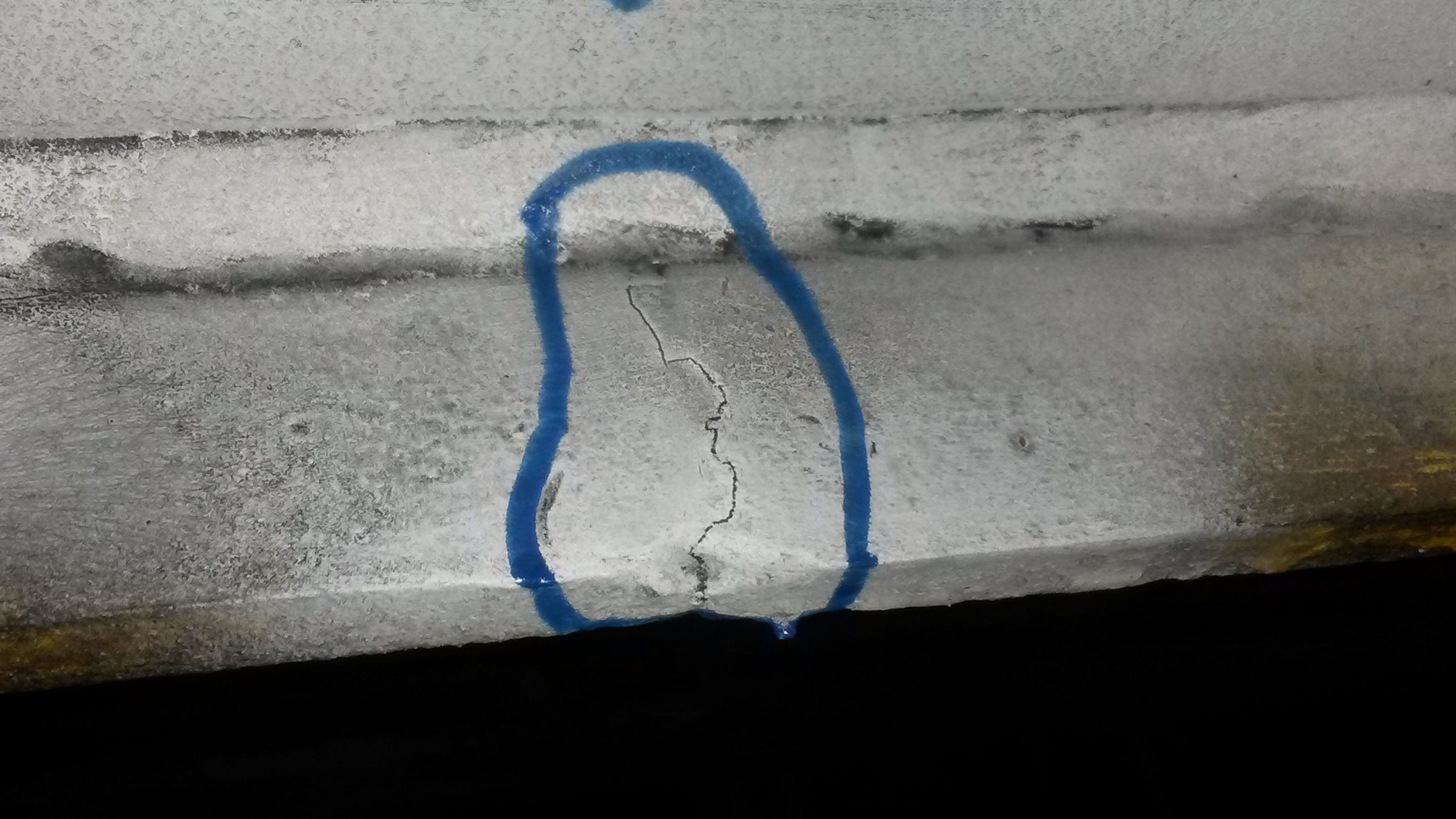
Today Eish talks about Fitness for purpose
Written by Keith Cain
Non-destructive testing (NDT) is an essential aspect of a fitness for purpose assessment. The NDT technique(s) used for flaw evaluation should be chosen to provide the type of information required to an acceptable degree of accuracy. Such information should include some or all of the following items:
- a) flaw length;
b) flaw height;
c) flaw position;
d) flaw orientation with respect to the principal stress direction;
e) whether the flaw cross-section is planar or non-planar.
Where a region of a structure cannot be inspected, appropriate judgement should be made, based on flaw distributions in areas of the structure which could be inspected, to estimate the size of flaw that could potentially exist in the uninspectable region. When assessing the likelihood of the presence of such flaws, account may be taken of knowledge of the weld preparations, the welding process and procedures, and the general quality of welding attained. Account may also be taken of the operating applied loads, process fluid parameters and any significant external environment relevant to the region.
Eish asks….
Is your test information on point?